How to Read Casino Bonus Terms: Vodka Bet as an Example
Much of the work of a language department is about precision: fixing a spelling, settling what a word means, and making sure a reader takes from a text what its writer put there. The same skill matters in an area that rarely gets attention in language education. That area is the promotional terms of online services. Bonus pages at online casinos are short, dense texts full of loanwords, abbreviations and conditional clauses. A reader who skims them usually comes away with a different idea of the offer than one who reads closely. This article looks at how such texts are built and what to watch for. It uses one Russian-language page as a worked example.
We read the page as a text, not as a recommendation. Online gambling carries real financial risk, and it is legal in some countries and not in others. Anyone thinking of using such a service should check the law where they live first.
Why promotional terms are a language problem
Bonus offers are written to be read quickly. The headline numbers are big and simple. The conditions that control them are short and technical. That gap is where misunderstandings start. Three features of the genre make it hard even for fluent readers:
- Borrowed jargon. Russian-language casino pages use words like вагер (from English "wager"), кешбэк ("cashback"), FS (free spins) and промокод ("promo code"). These words are transliterated, not translated. The reader has to already know what they mean.
- Compressed syntax. A phrase such as "до 300 без вагера за депозит" puts a maximum ("up to"), a missing condition ("without wagering") and a trigger ("for a deposit") into five words.
- Hidden scope. A percentage or number is only meaningful against a base, a cap and a time limit. Headlines often leave out at least one of these.
Teachers of Myanmar who explain how a single particle can change the meaning of a sentence will see the parallel. In promotional language, one preposition or one abbreviation can change what a person is actually agreeing to.
The example: what the Vodka Bet offers page presents
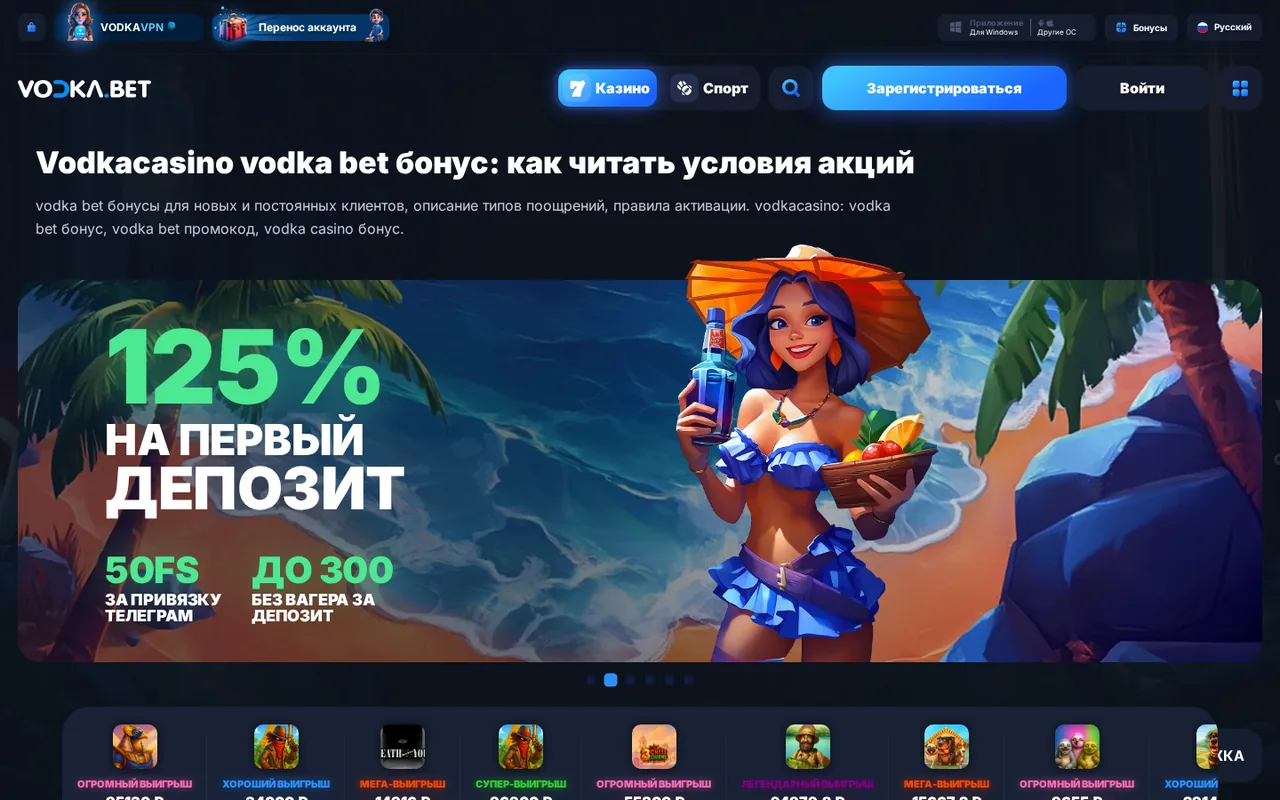
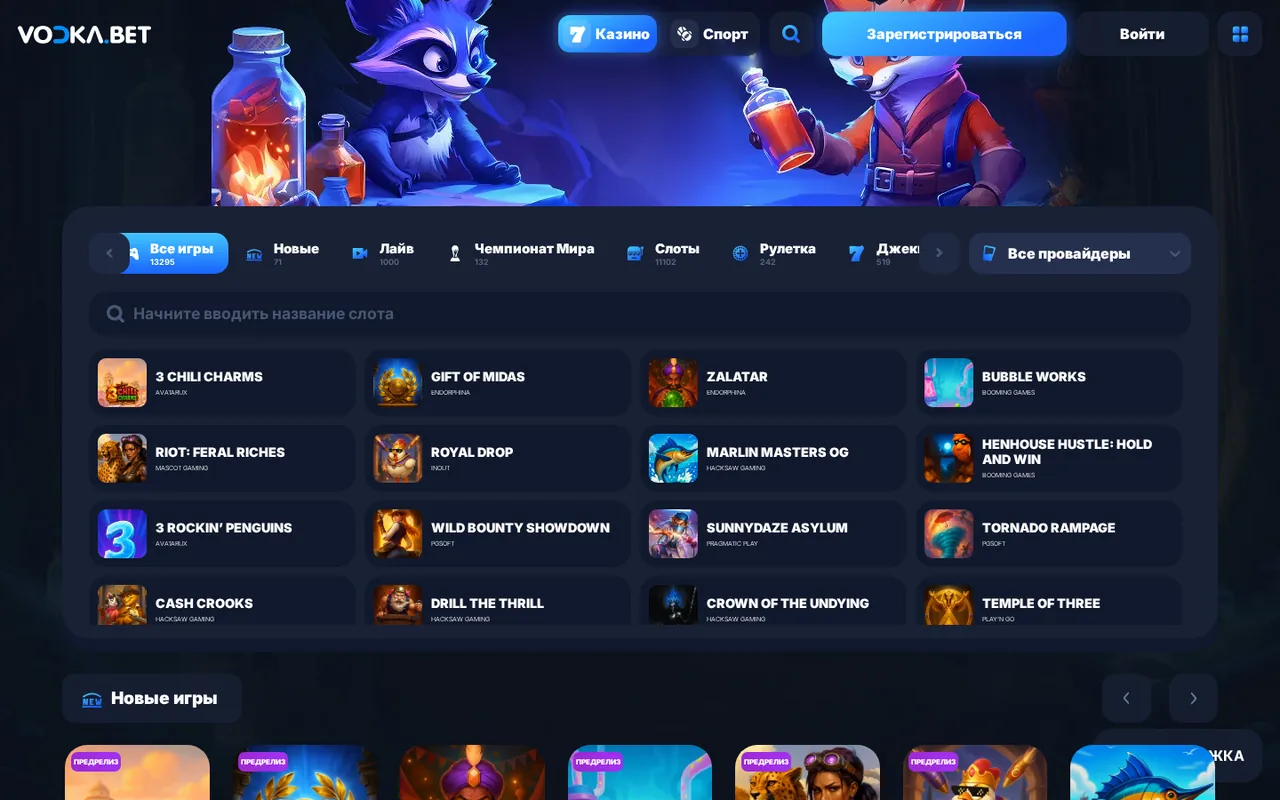
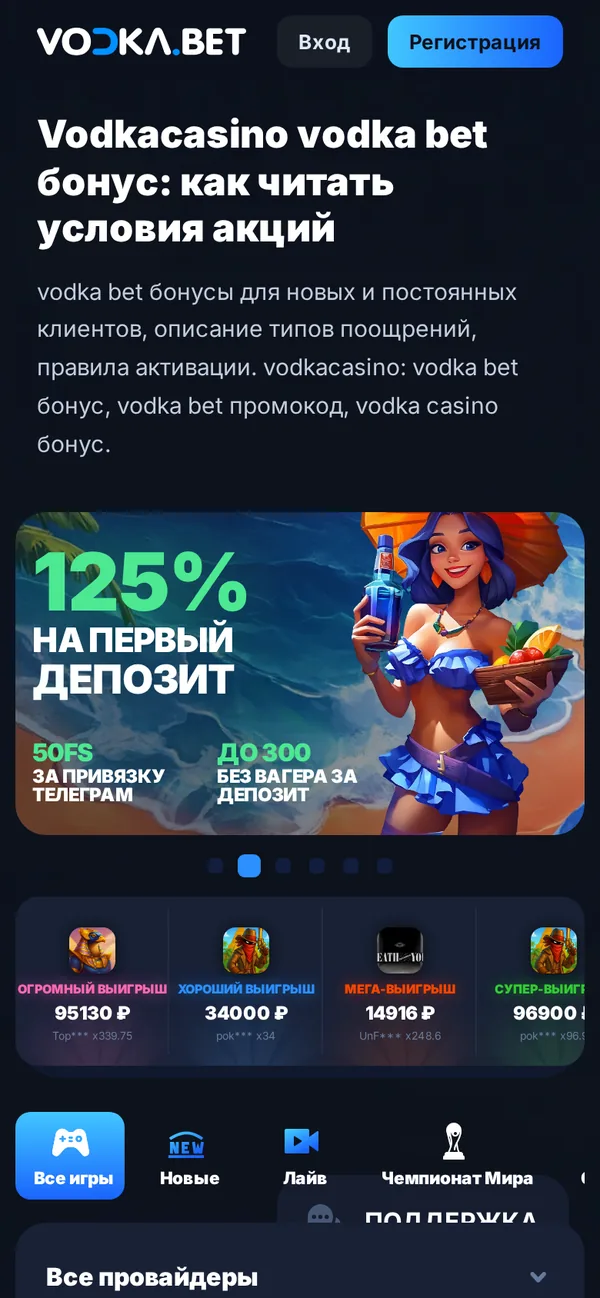
The Vodka Bet казино bonus page describes itself as a guide to "how to read the conditions of promotions". It covers rewards for new and returning customers, the types of incentives and the rules for activating them. The interface is in Russian. The navigation includes casino and sports sections, registration and login, support, a Windows application and other platforms, a VPN entry and an account-transfer option.
The offers named on the page are typical of the genre:
- 125% on the first deposit;
- 50 free spins (50FS) for linking a Telegram account;
- "up to 300 without wagering" for a deposit;
- a weekly cashback, with a countdown timer;
- a "VODKA Jackpot", where players collect four keys to open a "super prize";
- a tournament called "Короли водки" ("Kings of Vodka"), showing a prize fund of $12,705.00 plus 15,900 free spins.
The page also advertises instant withdrawal of "any amount" to bank cards, in cash or in cryptocurrency. It shows a running feed of recent wins with partly hidden usernames and multipliers.
Reading each type of bonus closely
Each type of offer raises its own set of questions. The table below matches the phrases on the example page to the questions a careful reader should ask before taking the headline at face value.
| Phrase on the page | What it literally says | What a careful reader checks |
|---|---|---|
| 125% на первый депозит | The bonus equals 125% of the first deposit | Maximum bonus amount, minimum deposit, wagering multiplier, time limit |
| 50FS за привязку телеграм | 50 free spins for linking Telegram | Which games the spins work on, value per spin, how winnings from spins are treated |
| до 300 без вагера за депозит | Up to 300, with no wagering, for a deposit | Currency or unit of "300", which deposit qualifies, whether "up to" depends on deposit size |
| Еженедельный кешбэк | A weekly return of part of something | Percentage, base (losses or turnover), whether cashback has its own conditions |
| Соберите 4 ключа | Collect four keys to open a super prize | How keys are earned, whether they expire, what the prize is |
Percentages need a base and a ceiling
"125%" sounds generous, but a percentage on its own says nothing about size. The deposit it applies to and any cap on the bonus decide its real value. Bonus funds also usually come with a wagering requirement. This is the number of times the bonus, or bonus plus deposit, must be bet before winnings can be withdrawn. In the language of these pages, that is the вагер.
"Without wagering" is the key qualifier
That is why the phrase без вагера stands out on the example page. An offer without a wagering requirement works very differently from one with it. In the text it carries as much weight as the number in front of it. A reader should still ask what "300" counts: money, spins or points. The word "up to" (до) marks a maximum, not a guaranteed amount.
Free spins are conditional by nature
Free spins are almost always tied to particular games and a fixed bet size. Winnings from them may be credited as bonus money, not cash. The Telegram offer adds a second condition, an action outside the casino (linking a messenger account). Readers should treat that as sharing personal contact data.
Promo codes, tournaments and the language of urgency
The page's own description names "vodka bet промокод" as a topic. Promo codes are short strings that unlock a specific offer. Their terms may differ from the standard bonuses, so the conditions attached to a code need reading on their own terms. A code does not cancel the general rules.
Tournaments and jackpots use another register: urgency. The example page shows countdown timers in days, hours, minutes and seconds next to the tournament and the weekly cashback. Phrases like "Стань королем водки" ("Become the king of vodka") and labels like "Легендарный выигрыш" ("Legendary win") or "Мега-выигрыш" ("Mega win") on the results feed are emotional language, not information. A language-aware reader can tell description from persuasion. The figure of $12,705.00 plus 15,900 free spins is the size of the whole prize fund. It is not what any one participant can expect to receive.
A useful rule from any reading classroom applies here: separate the claim from the condition, and do not let the size of the first decide how closely you read the second.
A practical reading checklist
Before acting on any promotional offer, whether on the vodka bet terms page or elsewhere, a methodical reader can go through these steps:
- Translate every loanword. Make sure terms like вагер, кешбэк, FS and депозит are fully understood, not guessed.
- Find the base and the cap. For every percentage, ask "of what?" and "up to how much?"
- Look for the wagering requirement, or for an explicit statement that there is none.
- Note time limits. Countdown timers show urgency, but bonuses also often expire after they are activated.
- Check game restrictions for free spins and bonus funds.
- Read the withdrawal rules alongside promises such as "instant withdrawal of any amount", because bonus conditions may still apply.
- Consider the legal and personal context. Check whether such services are permitted where you live, and whether the money involved is money you can afford to lose.
Why this matters for language learners and educators
Bonus terms are a good, if unusual, teaching text. They are short and real, and their stakes are concrete. They show how borrowed vocabulary enters a language through commerce, and how Russian takes in English gaming terms by transliteration. A similar process brings English technical words into Myanmar. They also show how meaning can sit in grammatical details: a preposition marking a limit, a negation removing a condition, an abbreviation standing in for a whole idea. Students who learn to break down such texts can transfer that skill to loan agreements, mobile phone contracts and government notices.
Conclusion
The Vodka Bet offers page is one clear example of a common genre: bold numbers, compressed conditions and a vocabulary built from loanwords. Reading it well does not need specialist knowledge of gambling. It needs the habits that language education teaches anyway: define your terms, look at every qualifier, and keep persuasion separate from information. Those habits protect readers in any language, on any page that asks them to agree to something.